Fitness
Commonwealth Games Glasgow 2026: What Everyday Athletes Can Learn
15 min read · 29 Jul 2026
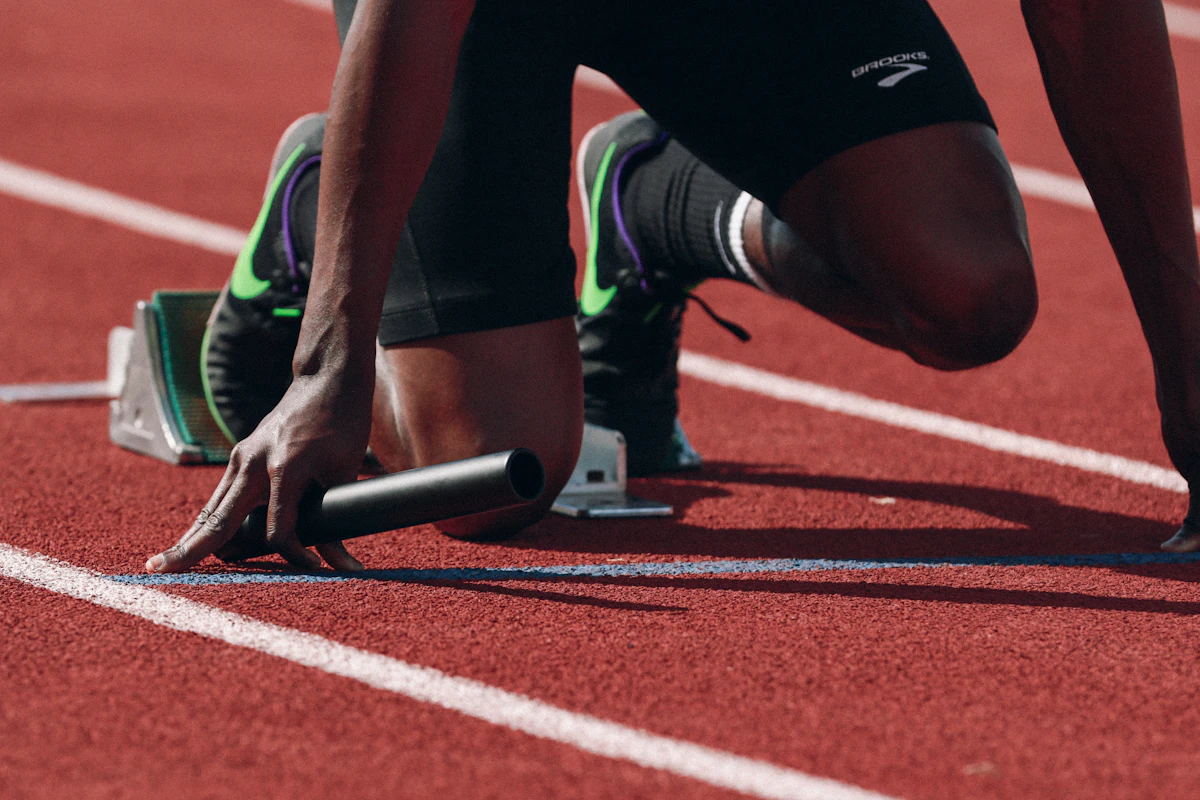
Commonwealth Games Glasgow 2026: What Everyday Athletes Can Learn
Every few years, a multi-sport championship gives millions of us a reason to care about sport again. The 23rd Commonwealth Games, held in Glasgow from 23 July to 2 August 2026, is that moment for 2026. Around 3,000 athletes from 74 Commonwealth teams are competing for 215 gold medals across a tightly packed 10-sport programme, all within a four-venue corridor roughly eight miles wide.
But here is the thing about watching elite sport: it is inspiring for about a week, and then life resumes. This guide is designed to outlast that. We will walk through what Glasgow 2026 actually is, then translate the way these athletes train into principles you can genuinely use, whether you are starting from the sofa or chasing a personal best.
Glasgow 2026 At A Glance
- Dates: 23 July to 2 August 2026. The opening ceremony was held on 23 July at the OVO Hydro; competition began on 24 July.
- Scale: 215 medal events across 10 sports, contested over 10 days and 133 sessions.
- Participation: Around 3,000 athletes representing 74 Commonwealth teams.
- Motto: "We Move Together."
- Format: A deliberately compact Games, with four venues inside an eight-mile corridor rather than a sprawling purpose-built park.
The Ten Sports
Glasgow's programme is smaller than recent editions but denser, and six of the ten sports are fully integrated Para sports rather than a separate add-on schedule:
- Athletics and Para Athletics
- Swimming and Para Swimming
- Track Cycling and Para Track Cycling
- Artistic Gymnastics
- Weightlifting and Para Powerlifting
- Boxing
- Judo
- Netball
- Bowls and Para Bowls
- 3x3 Basketball and 3x3 Wheelchair Basketball
This is the largest Para sport medal programme in Commonwealth Games history. Notably, the very first medal of the Games went to Para Powerlifting on opening day, the first time a Para sport has opened the medal tally at a Commonwealth Games.

Moments Worth Watching
- The Commonwealth Mile: The classic mile returns to the programme for the first time since 1966, replacing the 1500m. For a Games in Scotland, with its deep middle-distance tradition, that is a beautifully chosen swap.
- "Super Saturday" (1 August): The busiest day of the Games, with 44 gold medals decided across athletics, boxing, track cycling and judo, including every boxing final on a single day.
- The final day (2 August): Netball crowns its champion and the track cycling programme closes out.
Six Training Principles Worth Borrowing
Elite athletes do not have secrets so much as they have discipline about fundamentals. Here is what actually transfers to a normal life.
1. Everything is built around a date
Every athlete in Glasgow structured months of work around one fixed window. That is called periodisation, and the useful version for you is simply this: pick a date and an outcome. A 10K in October. A bodyweight pull-up by Diwali. Training without a target drifts; training toward a date organises itself.
2. Most of the work is unglamorous
A sprinter's season is not a highlight reel. It is thousands of repetitions of drills, easy runs, mobility, and gym work. The visible 10 seconds sit on top of an invisible base. If your training plan only contains the fun, hard, exciting sessions, you have built a roof with no walls.
3. Recovery is scheduled, not accidental
No serious programme trains hard every day. Adaptation happens during rest, which is why elite plans alternate intensity and protect sleep aggressively. If you train five days a week and feel progressively worse, the problem is almost never insufficient effort.

4. Strength underpins every sport
Look at the Glasgow programme and you will find barbells in the background of nearly all of it. Sprinters lift. Swimmers lift. Gymnasts do extraordinary strength work. Resistance training builds the tissue tolerance that lets you train more without breaking. For non-athletes, two sessions a week is enough to change your decade.
5. Technique before intensity
A weightlifter does not add plates to a broken pattern; they fix the pattern first. Most recreational injuries come from loading or accelerating a movement the body has not yet learned. Earn intensity.
6. Consistency beats intensity, every time
The single most replicable elite habit is showing up. Four moderate sessions a week for a year will beat six brutal weeks followed by three months off, every single time. This is unglamorous and it is also the whole game.

Build Your Own Ten-Day Games
Rather than just watching, run a parallel challenge in whatever window suits you. Pick one event from each of four categories and train toward it for ten days:
- Speed: A timed 400m, or 10 hill sprints.
- Endurance: A 5K walk, jog, or swim.
- Strength: Max push-ups, or a heavier goblet squat than last week.
- Skill: A 60-second plank, a single-leg balance, or a first unassisted pull-up.
Record your numbers on day one. Train four to five days across the ten. Retest at the end. The scoreboard being yours does not make it less motivating; it makes it more so.
Common Mistakes To Avoid
- Copying elite volume: A professional athlete trains 20 to 30 hours a week with coaching, physiotherapy, and full recovery time. Copying their schedule on top of a full-time job is how people get injured, not fit.
- Chasing the sport, not the fitness: Watching gymnastics does not mean you should attempt gymnastics. Borrow the principles; choose activities that suit your body and life.
- Motivation without a plan: Inspiration from a broadcast lasts days. A written weekly schedule lasts months.
- Skipping the base: Starting with maximal effort is the fastest route to a strain and a three-week break.
- Ignoring nutrition and sleep: No athlete in Glasgow got there while under-eating protein and sleeping five hours.
What To Do This Week
- Watch one session of a sport you have never followed. Notice how much of it is technique.
- Pick your date and your one measurable target.
- Write four training slots into your calendar as appointments, not intentions.
- Add two strength sessions if you currently do none.
- Protect your sleep window as seriously as you protect your workout.
FAQ
When are the Commonwealth Games 2026?
The Glasgow 2026 Commonwealth Games run from 23 July to 2 August 2026, with the opening ceremony on 23 July and competition starting 24 July.
How many sports are at Glasgow 2026?
Ten sports, six of which are fully integrated Para sports, producing 215 medal events across 10 days and 133 sessions.
Why is the Glasgow 2026 programme smaller than previous Games?
Glasgow 2026 was designed as a compact, cost-controlled Games using four existing venues within an eight-mile corridor, which keeps the schedule dense and the event financially sustainable.
Can watching elite sport actually improve my fitness?
Only if you convert it into a plan. Motivation from watching fades within days; a written schedule with a target date is what produces change. Use the Games as a start line, not a substitute.
How should a beginner start training after being inspired by the Games?
Begin with three to four moderate sessions a week, including two full-body strength sessions, and build volume by roughly ten percent a week. Prioritise technique and sleep over intensity for the first month.
What is the Commonwealth Mile?
It is the one-mile track race, which returns to the Commonwealth Games programme at Glasgow 2026 for the first time since 1966, replacing the 1500m.
How FitLifestyle Helps
FitLifestyle turns inspiration into structure. Our coached programmes use the same principles the athletes in Glasgow rely on, a clear target date, a base built before intensity, strength work twice a week, and recovery scheduled rather than hoped for, adapted to the hours you actually have.